Visualize the future so you know where you're headed
How we helped an organization get inspired by crafting a vision of the ideal booking.com experience.
My role: %%%
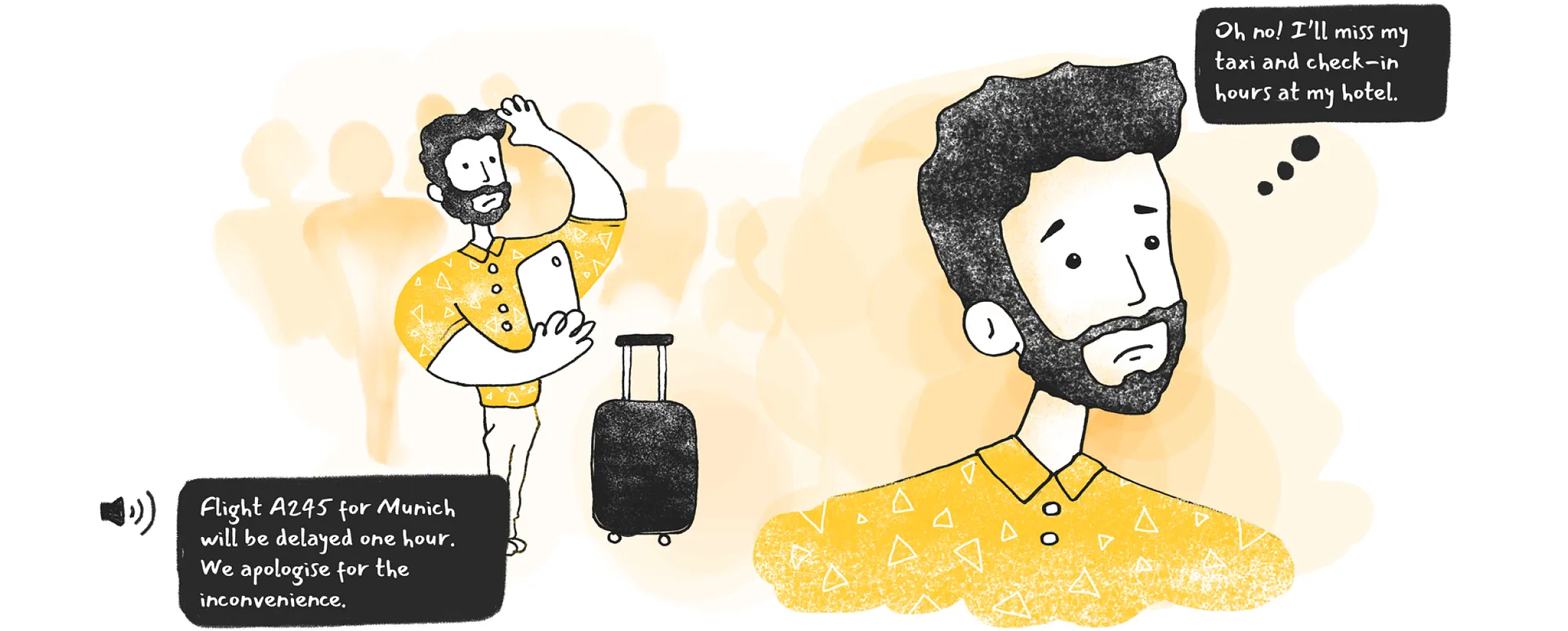
Overview
In 2019, the Booking.com organization that was primarily focused on accommodations and the booking site, went through a reorganization and were in the process of redefining their strategy. There was general confusion regarding the priorities for each team, how they contributed to the overall company strategy, and why teams should collaborate with each other.
The organization had already identified the purpose, current capabilities, and needed help defining the vision. This would help to inform the strategy and execution.
A product organization without a vision, is like running a race and not knowing where the finish line is. To help communicate the vision, or north star, I assembled a working group composed of UX designers, a copywriter, and a project manager to help create the UX Task-force, with the Head of Strategy as our leadership sponsor. The combined experience of the task-force would enable us to create a compelling, tangible, and visual representation of the potential future for the organization.
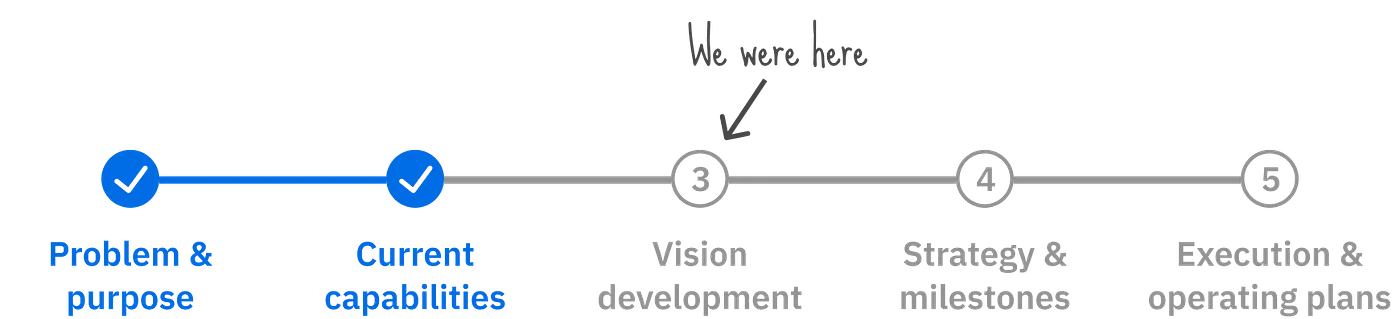
Goals
- Help product stakeholders visualize their long-term goals and aspirations so they're tangible for product teams.
- Get teams excited and inspired about the future of the organization.
- Create alignment between the company goals, organizational goals, and individual team goals.
- Encourage ownership of the end-to-end guest experience.
Milestone 1: Kick-off and alignment
We held an alignment session with the task-force to define objectives, deliverables, stakeholders, working agreements, milestones, and resources for the initiative.
Key learnings
- We clearly defined what we were solving, as well as what we were not doing, in order to set expectations with stakeholders from the beginning.
- We identified risks that we might encounter, so there was adequate time to mitigate or adjust course.
- It was vital to get product buy-in EARLY, OFTEN and REPEAT.
- By keeping the task-force small and setting expectations on the time commitment and duration, we could make decisions quickly.

Milestone 2: Understand the product perspective
We held stakeholder sessions with product leaders from different areas. We wanted a solid understanding of their point-of-view, challenges, and big ideas to help frame the discussion and direction. We also used these sessions to gain alignment and communicate the objectives of the UX Task-force.
Key learnings
- During each session, task-force members took notes and generated How Might We (HMW) statements, or user needs statements, that could later be referenced during ideation sessions.
- Getting input from product stakeholders in the beginning helped us to better align with the overall strategy.
Milestone 3: Understand the user needs
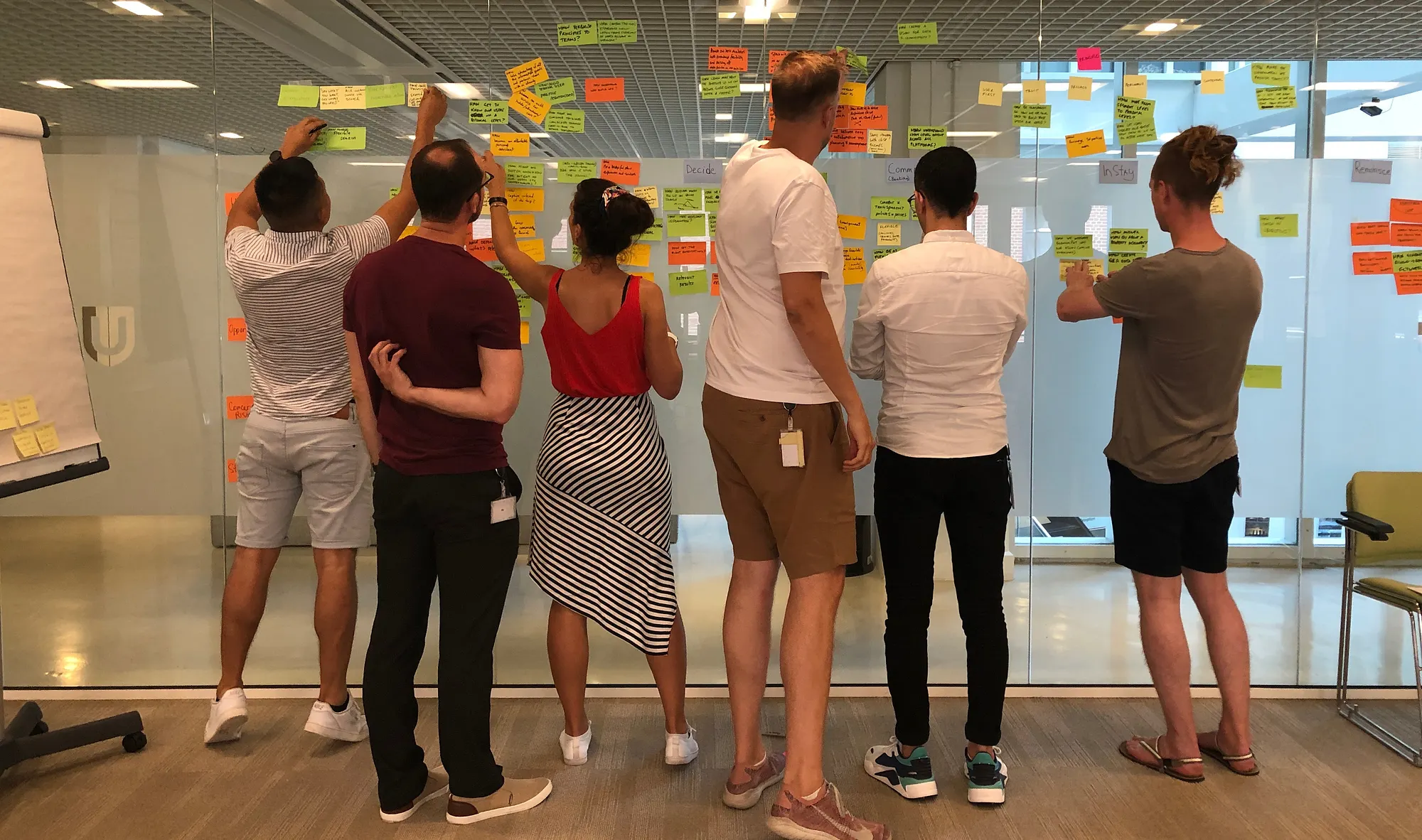
Each task-force member organized a journey mapping session within their product area. Product and UX roles were invited to participate and the goal was to gather the user needs, actions, and challenges from their product perspective in order to identify opportunities.
Key learnings
- A sense of of ownership is crucial in making a product vision useful, so we included a variety of team members across the organization to participate.
- The HMW statements reframed the user needs in a way that enabled teams to innovate. They were based on challenges users face when trying to achieve their goal. “How” implied that we didn't have the solution — it left room for interpretation and allowed teams the freedom to explore multiple ideas. “Might” suggested that there was room for multiple solutions. “We” emphasized that it was a team effort and success would be achieved through collaboration.
- Document everything. I took photos and added raw notes to a centralized user journey spreadsheet so it was easy to reference later and we didn't miss out on any key insights.
Milestone 4: Identify opportunities
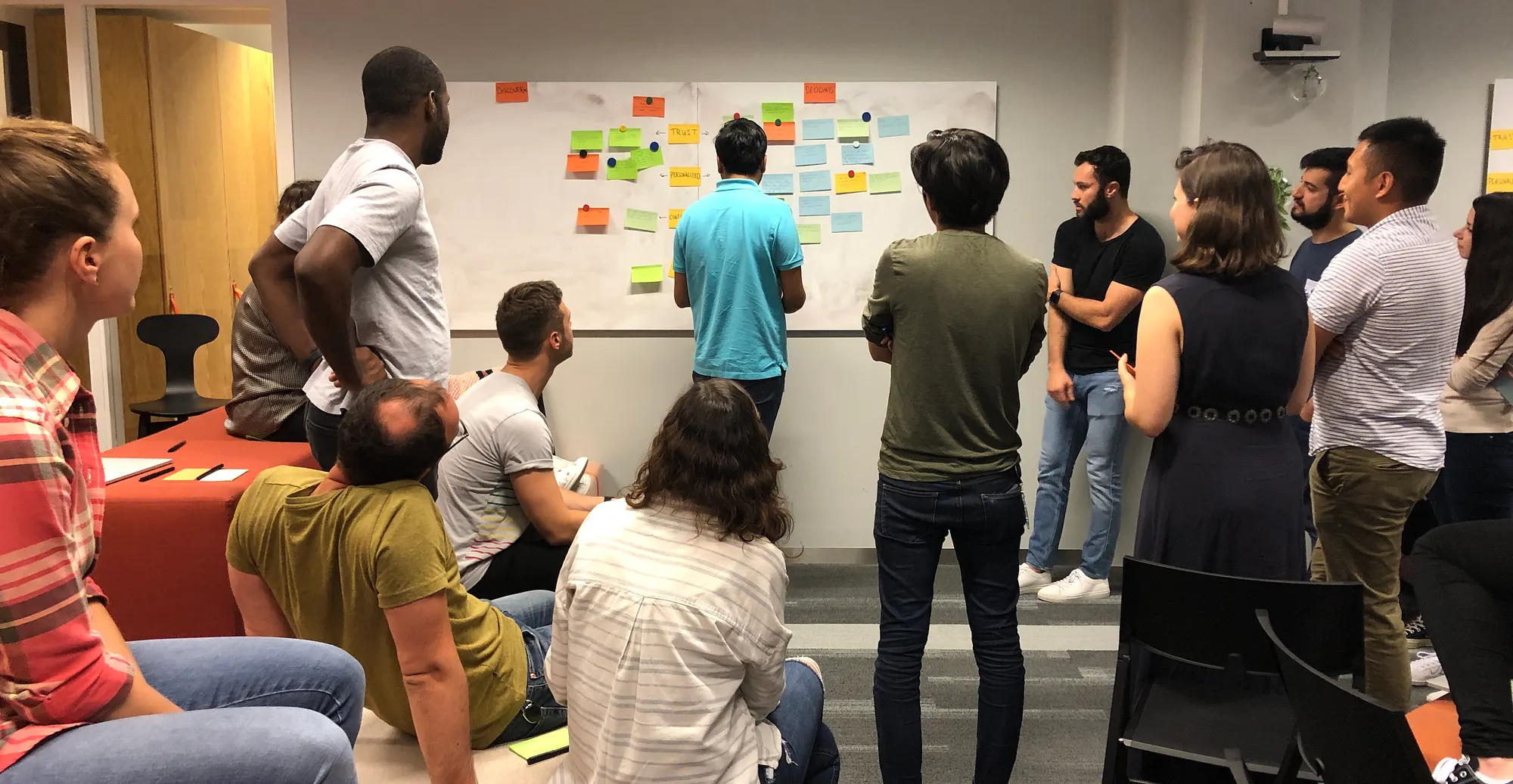
After we held sessions with each product team, we reviewed the notes and mind-mapped the output into themes. The goal was to have a user journey that was relevant for the entire department, so we didn't want the user needs statements and challenges to be overly granular.
After summarizing the use cases, HMW statements, challenges and opportunities, we consolidated them in a centralized spreadsheet. We then prioritized each use case based on 3 criteria:
- Scope - Did it align with our strategic objectives? (yes/no)
- Impact - What was the potential impact to the end user? (1-5)
- Ease - How easy was the idea to implement? (1-5)
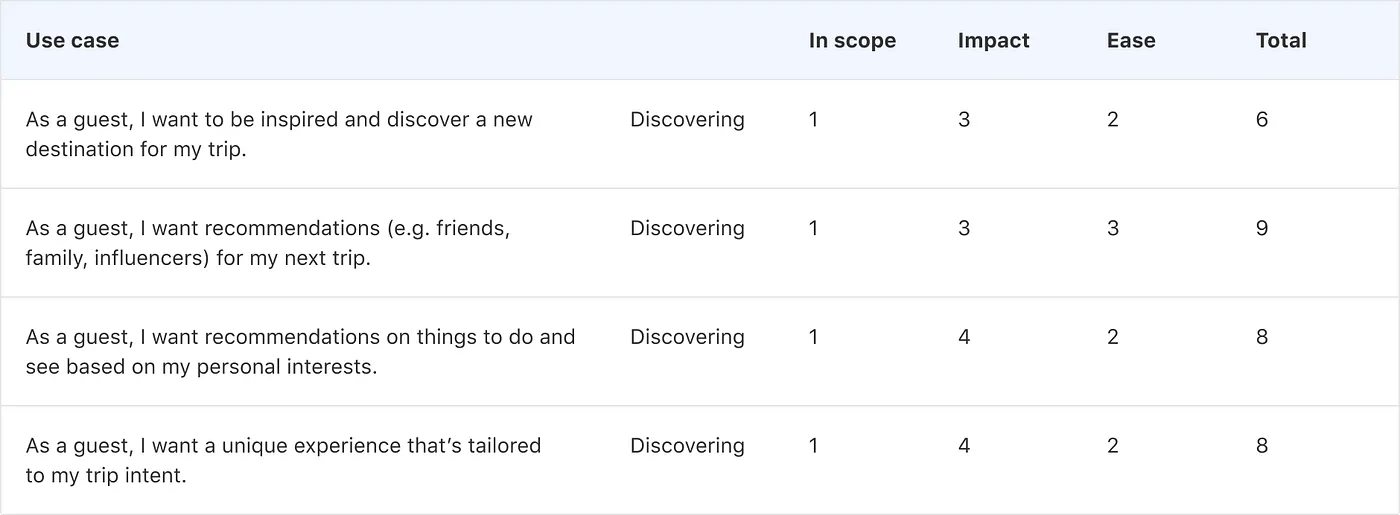
This provided guidance on what to focus on first. To better understand the size and potential impact of each use case, we gathered as much data as we could. We leveraged the knowledge of data analysts, researchers, product managers, and other UX roles to collect qualitative and quantitative data from existing research.
After prioritization, we knew what opportunities to ideate on first. We held brainstorming sessions with each product area and generated Big Ideas that were relevant to their team. We gathered all the ideas in a big ideas document and generated Solution Sketches for concepts we wanted to explore further.
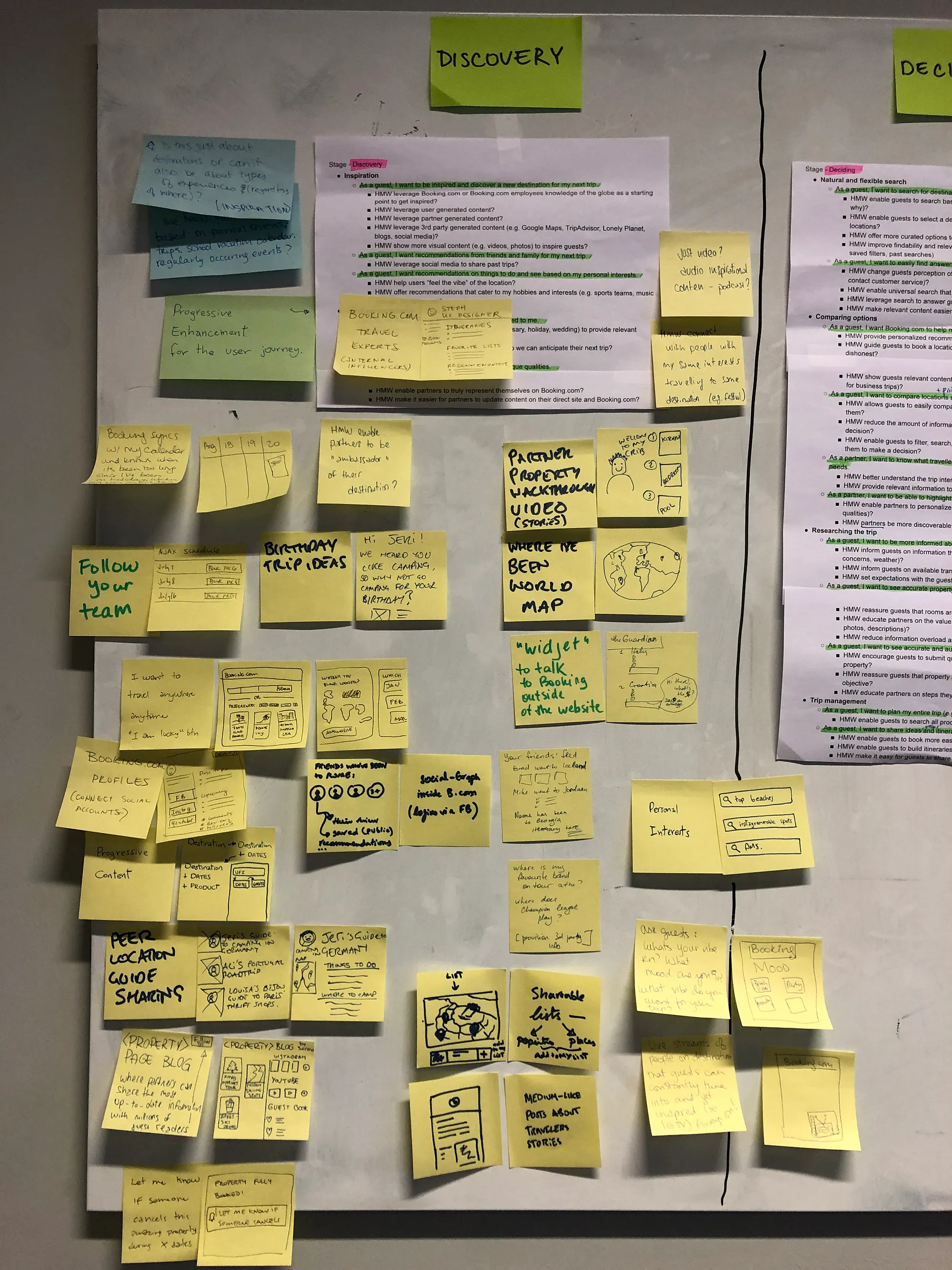
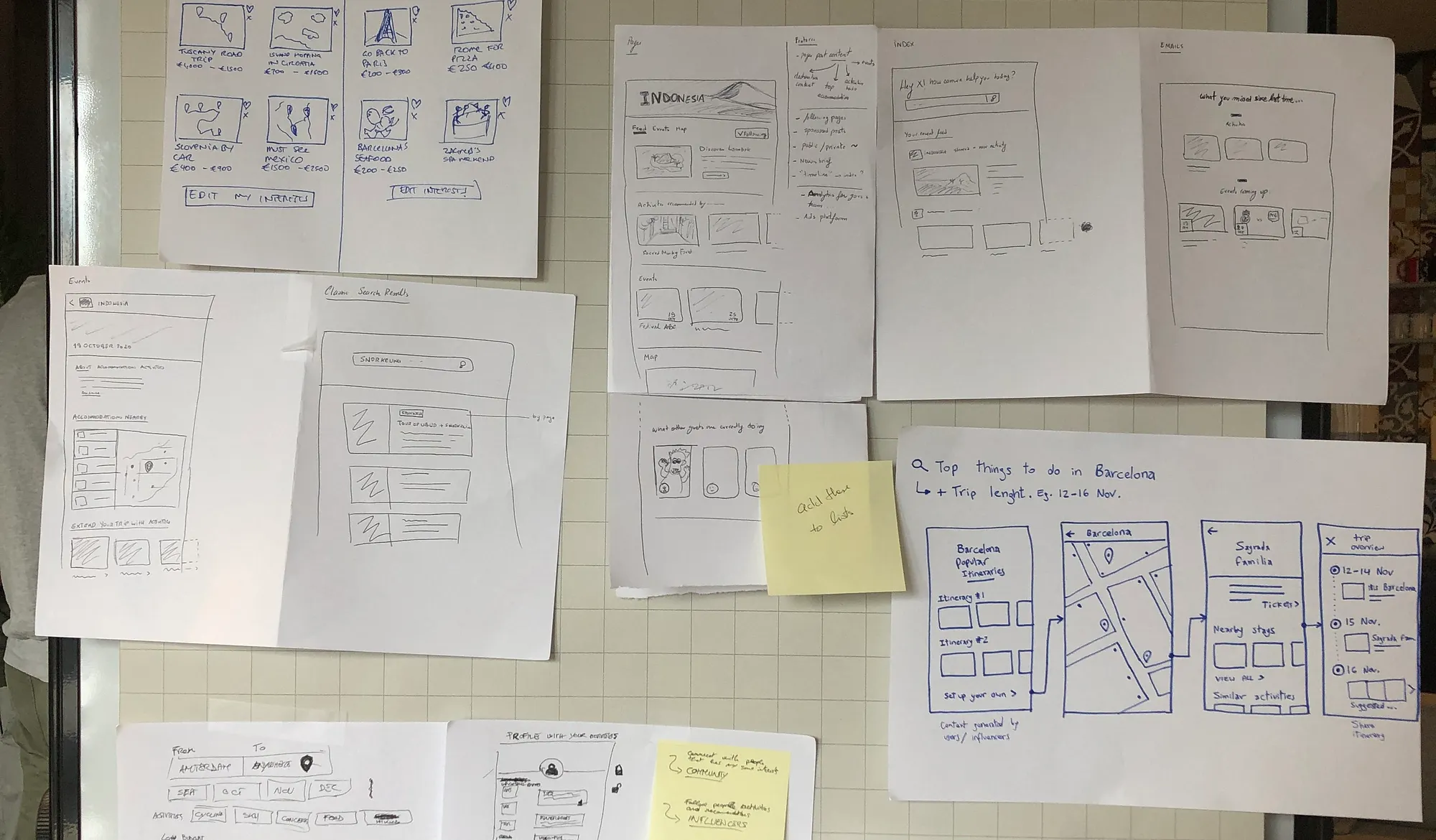
Based on the output of the journey mapping sessions, ideation sessions, and prioritization exercise, the UX Task-force started to create hi-fidelity visuals to illustrate the main concepts.
Key learnings
- When working with data analysts, they needed a hypothesis before they were able to provide quantitative data. This allowed them to better understand the problem we were trying to solve.
- For individuals that hadn't participated in a Big Ideas brainstorm before, they had difficulty understanding the concept and deliverables. We used a template that visualized the exercise, and encouraged anyone that could draw a box and a stick-figure, to participate.
Milestone 5: Visualize the ideal scenario
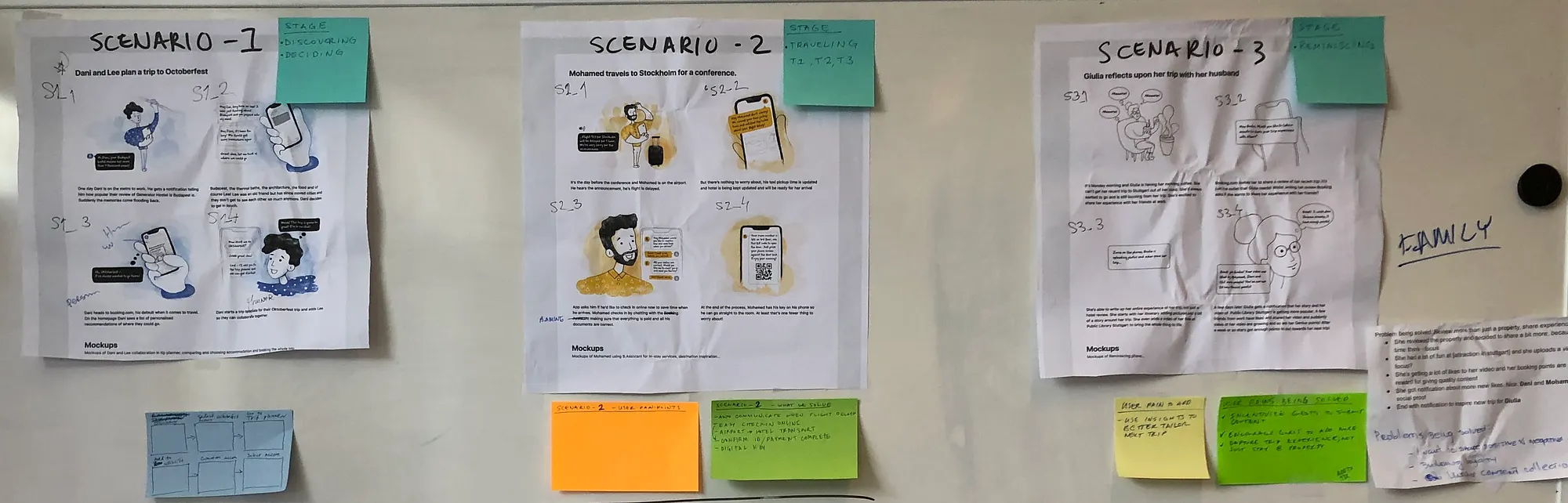
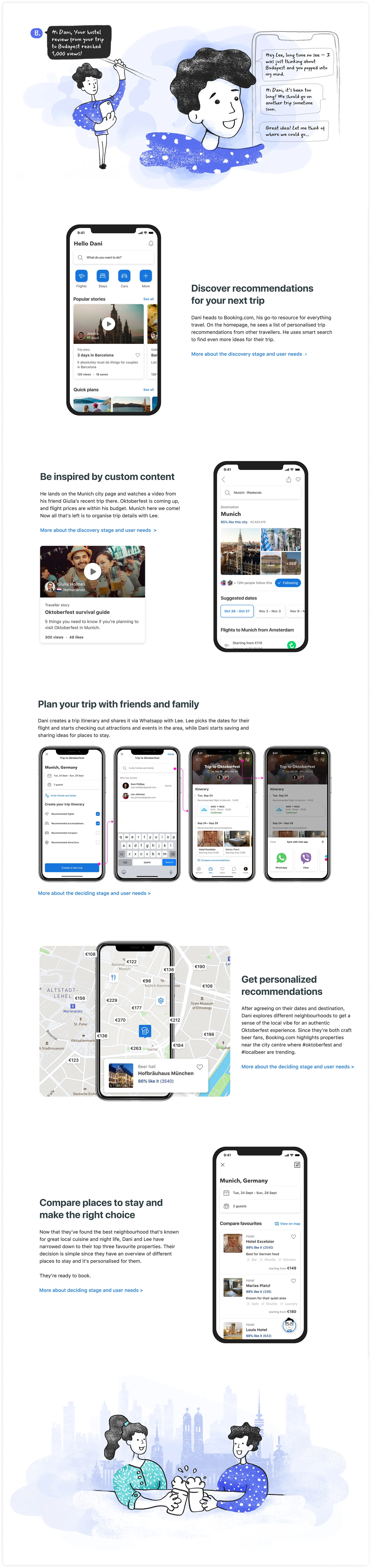
In order to communicate the user needs and potential solutions, we needed to craft a visual story that showed what the future state of our products could be. We drafted aspirational user scenarios that connected related use cases and concepts. We highlighted what a delightful experience could look like if we solved the primary pain points our users encountered.
3 scenarios
- Discovery and Deciding stage 2 travelers discovering and planning a trip together.
- Preparing and Traveling stage 1 business traveler going for a meeting.
- Reminiscing stage 1 traveler reflecting on a past trip and sharing his experience.

Each story represented a different type of user, during a different stage of the journey, and showcased the ideal travel experience. The stories were supported by visual concepts of the Booking.com app and what the product experience could be. Not only did they demonstrate how we could solve user problems, but they also tied back to the company objectives.
To share the final output and make it a living resource that would continually evolve, we created an internal site. We included everything that would be relevant and helpful for product teams: visual concepts, user journey, scenarios, and product principles.
Key learnings
- Work with a copywriter when phrasing use cases, HMW statements, and stories to ensure that the original intent is captured.
- Hold regular alignment sessions with stakeholders and leadership so there's opportunity to make adjustments.
- Use multiple data-points, including quantitative and qualitative data, to triangulate insights so you prioritize the key ideas.
Milestone 6: Share and communicate the vision
During the official playback to the organization, we shared an overview of the project, the process, the stories and concepts. We kept the session brief and provided a sample of what was available on the intranet. Giant posters of each user story covered the walls so people could mingle and view each concept in more detail. We also had delicious cupcakes to celebrate!
Key learnings
- It's critical to define expectations and deliverables from the beginning so everyone is on the same page.
- Set deadlines for important milestones. The final playback to the organization was announced weeks in advance, which held us accountable.
- Schedule adequate time to design the high-fidelity concepts and ruthlessly prioritize.
My main take-away was that creating the vision...was just the beginning. The more challenging, but rewarding goal was to get the insights into the hands of product teams, communicate the value, and educate people on how to take that first step.